How to Spike a Volleyball?
Approach the set, build speed through your final steps, jump, and contact the ball high in front of your hitting shoulder. If you start too early, get under the ball, or make contact too low, your spike can lose power or end up in the net. This guide shows you how to spike a volleyball with better timing, footwork, contact, and shot control, while fixing the mistakes that commonly hold hitters back.
Understanding the Volleyball Spike
A spike is one of the most powerful offensive moves in volleyball. A player approaches the ball, jumps, prepares the hitting arm, and accelerates it forward to contact the ball overhead. The player aims to send the ball into an open area of the opponent’s court. A strong downward hit is common, but smart placement can be just as effective.
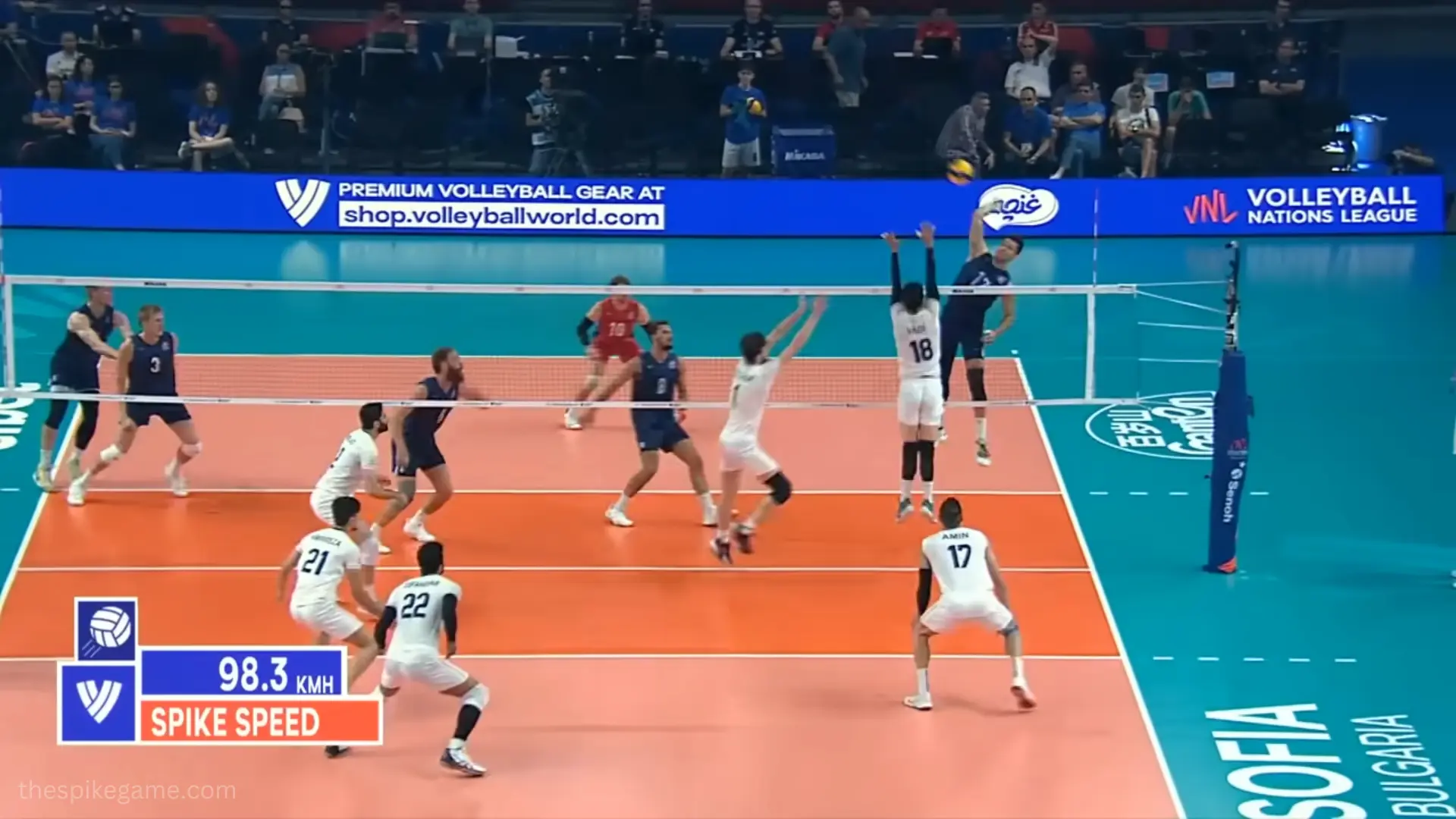
A good spike depends on more than arm strength. The player must time the approach, jump under control, contact the ball high, and choose the right target. Good timing and clean contact often produce better results than simply swinging harder.
If you also enjoy volleyball games, check out our article on The Spike mod apk unlocked all characters. It covers gameplay features and spiking in the virtual version of volleyball.
How a Powerful Volleyball Spike Creates a Scoring Advantage
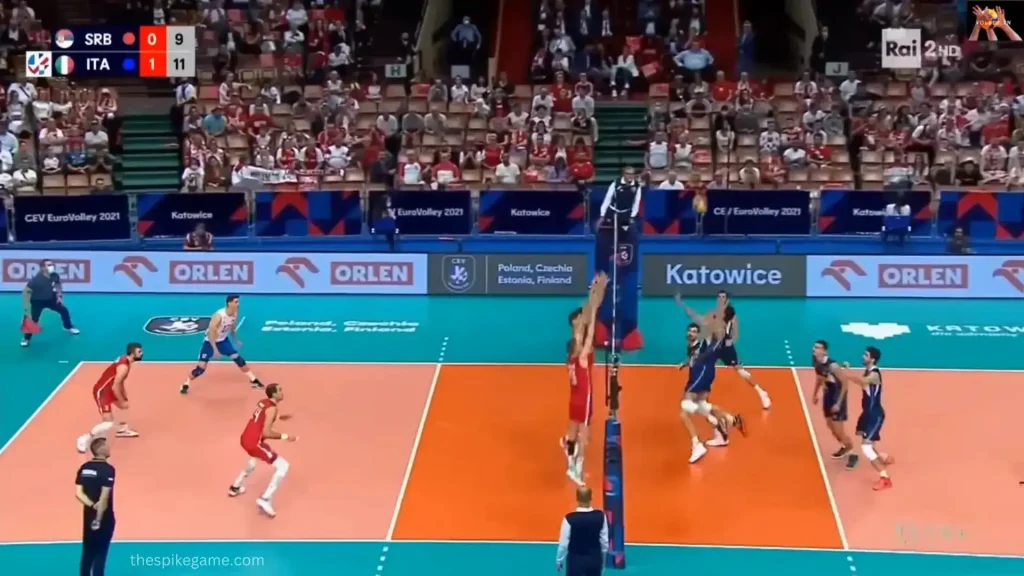
A well-placed spike can win a point or force the opposing team into a difficult defensive play. A skilled hitter can attack open space, hit around the block, or change the speed of the shot. Consistent attacking also puts pressure on blockers and back-row defenders.
How to Spike a Volleyball Properly
The goal of a volleyball spike is to attack open court space and make the ball difficult to return. Players can use hard-driven spikes, roll shots, tips, and controlled placement based on the situation.
Read the Set Before Your Approach
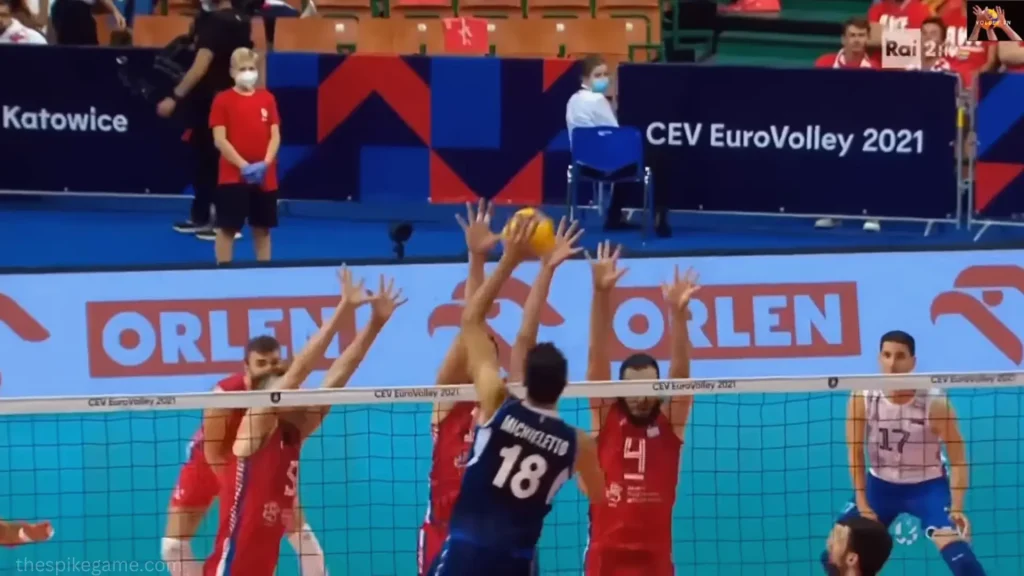
Watch the setter and track the ball. Adjust your approach to the height and location of the set.
Prepare Your Body and Hitting Arm
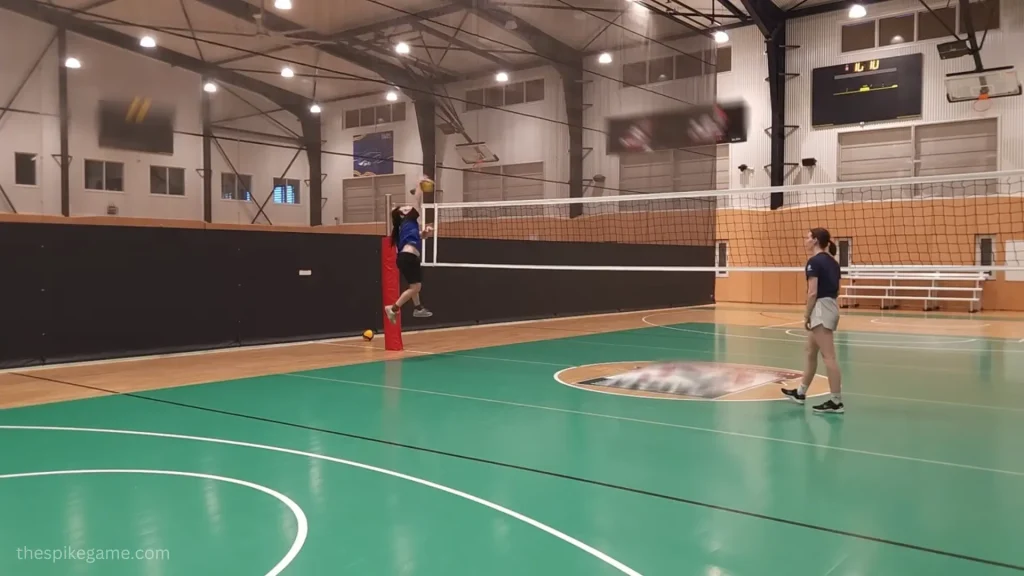
Stay balanced and track the ball as you jump. Prepare your hitting arm, then contact the ball at full reach above and slightly in front of you.
Set Your Starting Position
Start far enough from the net to build a controlled approach. Adjust your starting point to the set and your court position.
Use the Correct Spike Approach Footwork
For a three-step approach, right-handed players use left-right-left. Left-handed players use right-left-right. Keep the early step controlled, then accelerate through the final two steps.
Time Your Jump to the Set
Do not jump at a fixed point in the ball’s flight. Read the set and time your takeoff so you can contact the ball near full extension.
Finish the Swing Under Control
Let your hitting arm follow through naturally after contact. Stay balanced and avoid drifting unnecessarily toward the net.
Volleyball Spiking Techniques for Power, Timing, and Control
Use these techniques to improve your spike power, timing, and control:
How to Improve Your Spiking Skills
A reliable spiker must adjust to different sets, read the block, and choose the right shot.
Practice Different Types of Sets
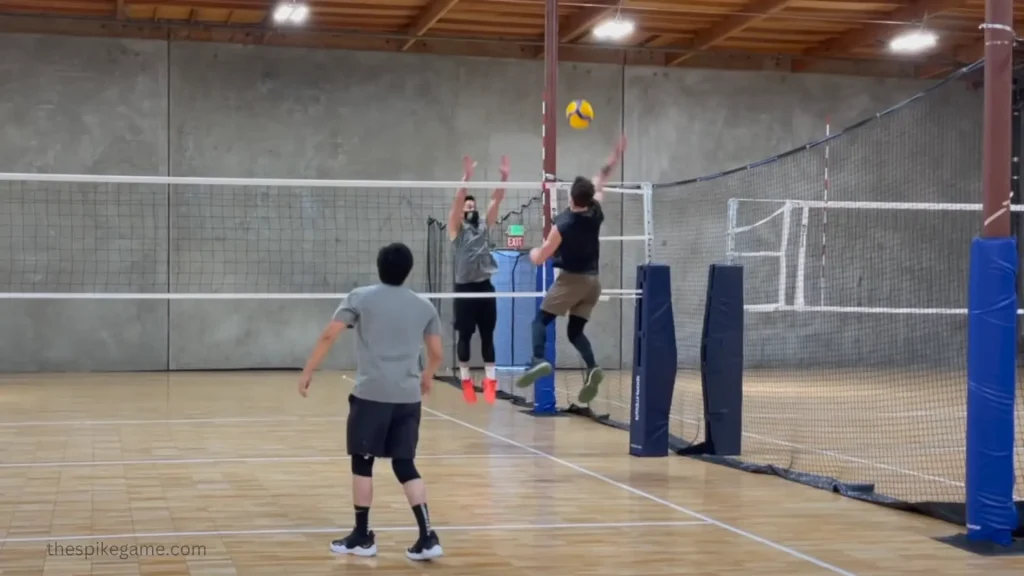
Repetition and consistency is the key to mastering a powerful volleyball spike. Being consistent can be difficult because sets differ so much. However, practice high, low, inside, and off-the-net sets. Adjust your approach before you jump.
Read and Beat the Block
As an attacker in volleyball, your major objective is to earn points by outwitting the blockers on the other team. Observe their movements carefully to spot any weaknesses in their protection. Watch the blocker’s position and hands. Attack open space or use the block when the angle is available.
Vary Your Attack
Vary your attack to keep blockers off balance. Mix hard spikes with roll shots, tips, line shots, and angled attacks.
Stand Yourself on a Box
A box drill can isolate arm swing and ball contact. Use it only as a supplemental drill because it does not train approach timing or jump positioning.
Practice From the 3-Meter Line
Practice some attacks from the 3-meter line. The extra space helps you read the set and improve your timing.
Practice Against a Live Block
Practice with a blocker when possible. This helps you read the block and choose your target under game-like pressure.
If you also play The Spike Volleyball Story, learn how to Boom Jump in The Spike Volleyball Story for better in-game jump timing and power.
Common Volleyball Spiking Mistakes
How to Practice Volleyball Spiking Alone
Solo practice can improve your approach, ball contact, and shot control. You can train these skills with a volleyball, a safe wall, or simple training equipment.
Here are some effective ways to practice spiking alone:
Practice Your Spike Approach
Practice your three-step or four-step approach without the ball. Keep your footwork consistent and accelerate through the final steps.
Practice Spiking Against a Wall
Mark a net-height line on a safe wall. Set the ball to yourself and hit above the line. Practice line, angle, tip, and roll shots to improve control.
Ball Machine or Ball Launcher
These devices can throw the ball in different directions, allowing you to practice your approach and hits consistently. Change the ball height and location so you can practice adjusting your approach and timing.
Rebounder
A rebounder lets you hit the ball and have it come back to you, enabling you to work on your approach, hit, and follow-through without chasing the ball.
Solo Trainer or Self-Practice Setter
This device helps you set the ball for yourself, allowing you to focus on improving your hitting technique. Solo drills are useful for repetition, but they cannot fully replace live sets and blockers. Use team practice to improve your timing, reading, and shot selection under game pressure.
Frequently Asked Questions
Conclusion
Good spiking comes from reading the set, getting your timing right, and making clean contact with the ball. You do not need to hit every ball as hard as possible. Sometimes a well-placed shot is the better option.
Keep practicing with different sets and targets. Learn to adjust when the ball is too high, too low, or away from your ideal hitting position. These small adjustments can make your attacks more consistent during a match.